|
OLYMPIC MORTGAGE |
|
 |
| Book a call | Apply now | Email David |
This deal didn’t work out, and for good reason.
|
| I was just finishing a conversation with a client who was about to buy a commercial property for his first purchase. In this case, the people selling also lived in the property. It ended up not happening for various reasons, but what remained with me throughout was how wrong of a first purchase it would have been. |
Bring it back to 2003.
|
| People in Gordon Head and all over Victoria bought in the early 2000s for $300K. Now they’re selling and looking at $1.6 million. Good investment? Sure. You live there. Your family lives there. You made $1.3 million in the value of the thing going up. Of course. |
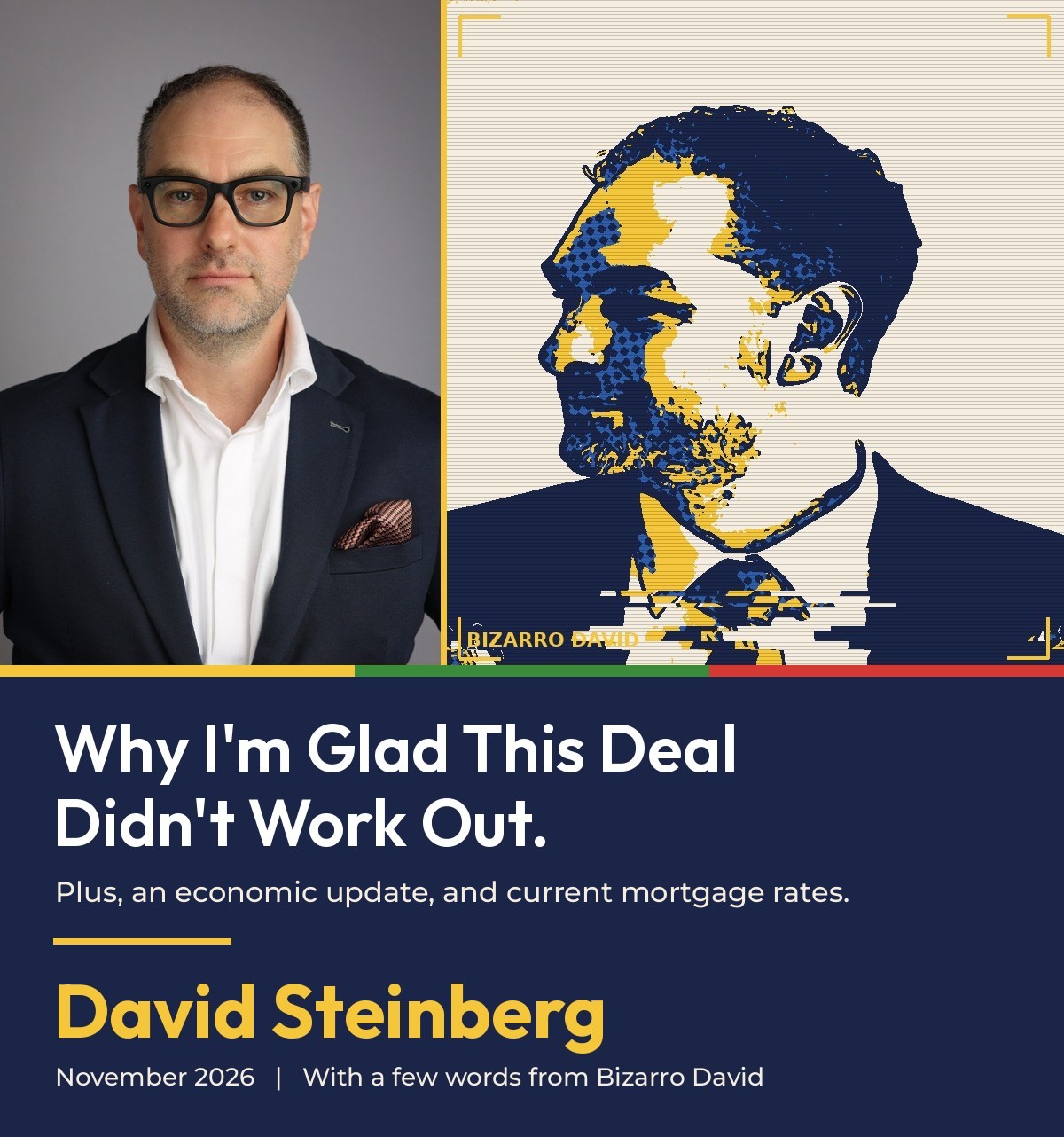
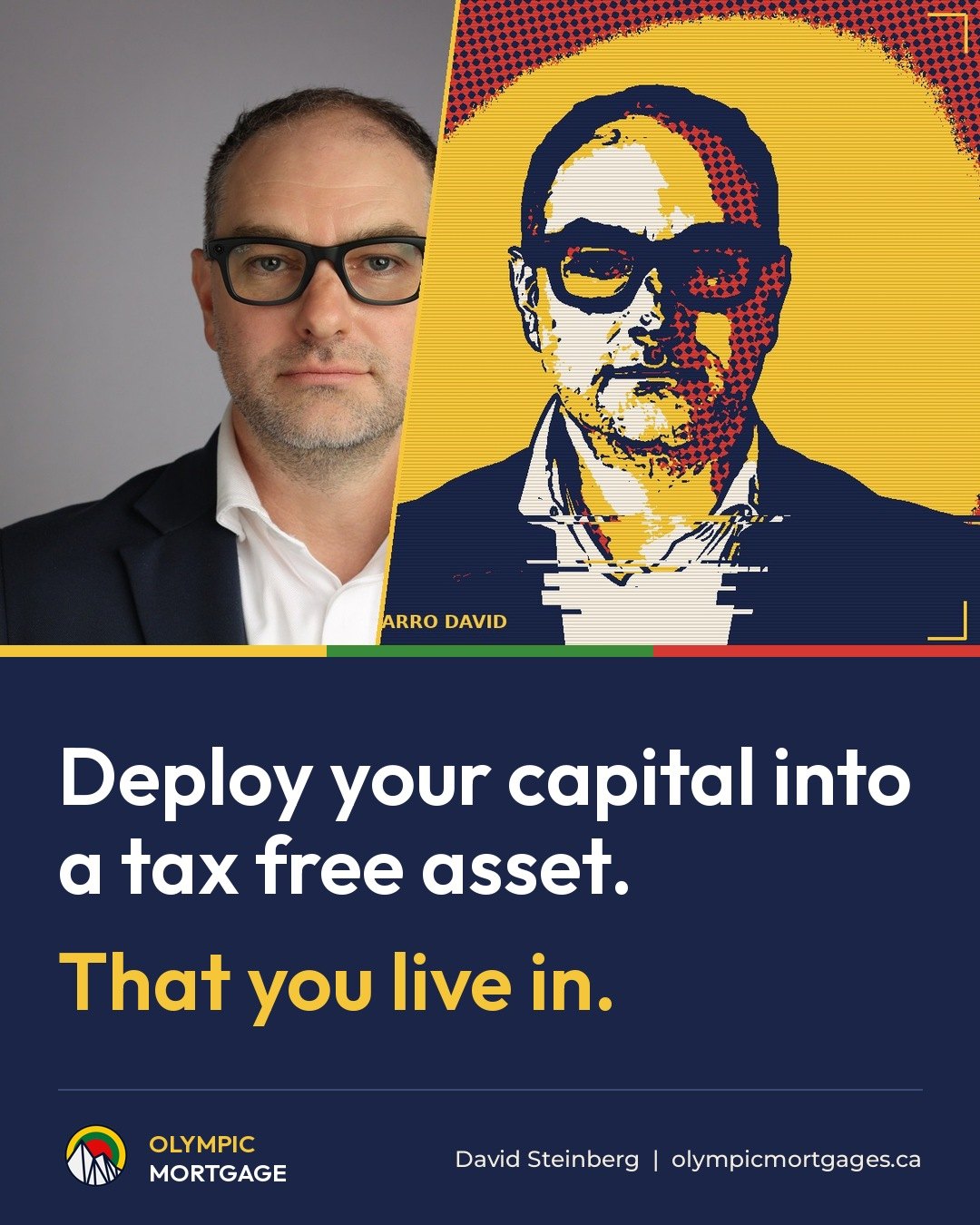
| Before I go on with the story, I’d like to introduce Bizarro David. He’s my AI. |
 |
Bizarro David: Hello. I’m Bizarro David, David’s AI. I’m David, but the opposite. He has opinions. I have footnotes. He says TAX. FREE. in capital letters. I say “talk to your accountant” in small ones. David does the writing. I’m the fine print that learned to talk.
Back to you, David, before I start citing sources.
|
What makes the primary residence purchase special.
|
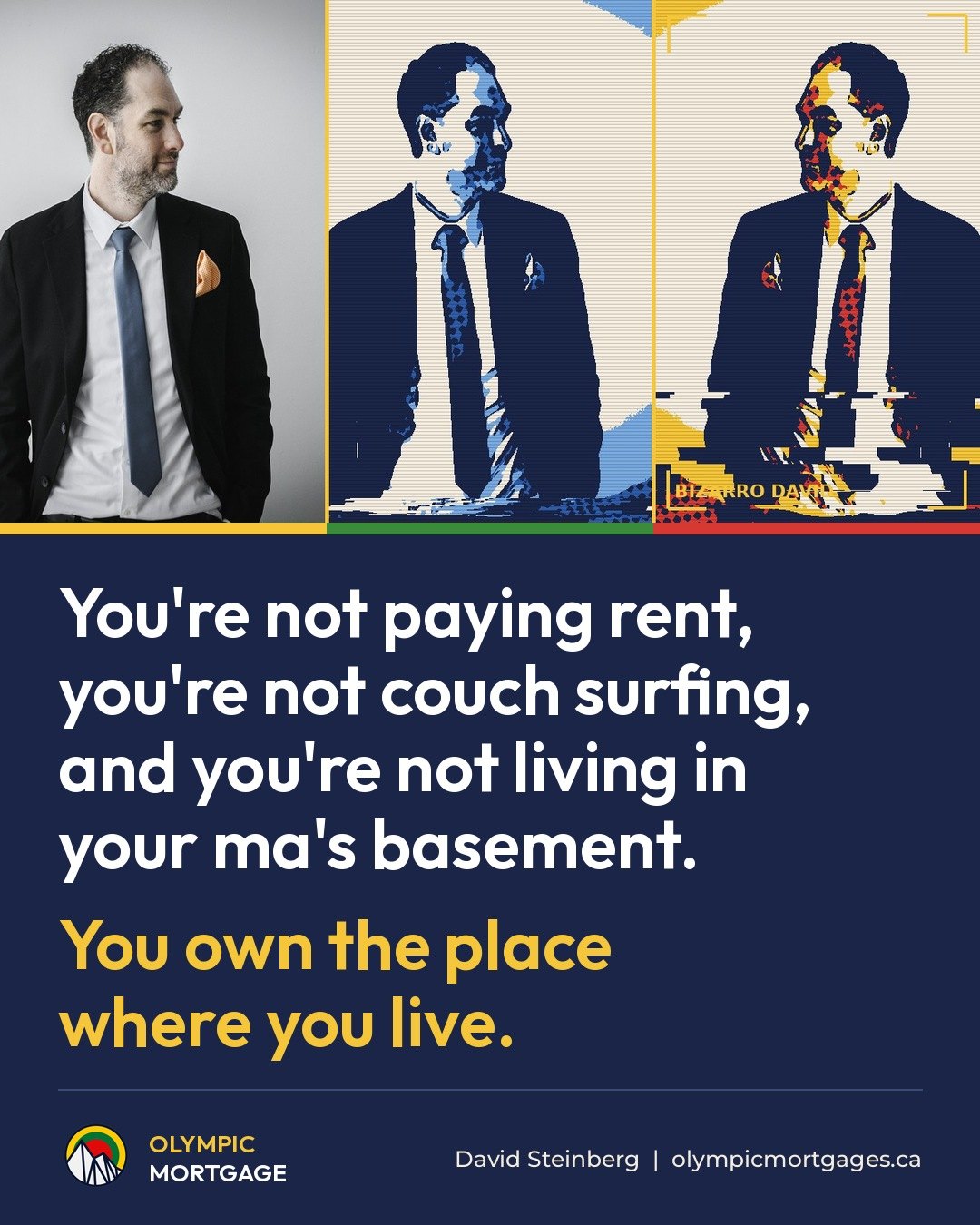
| First of all, you live there. You’re not paying rent, you’re not couch surfing, and you’re not living in your ma’s basement. You own the place where you live, and you don’t pay anyone else rent. |
| Plus, an added bonus. You get to fix it up and make it your own, just the way you like. All the while, you’re increasing the value of your property as you maintain and fix it up. |
| Not paying rent, fixing it up, and increasing its value. Lots of benefits already. |
 |
|
|
| I said it. The capital appreciation coming at you tax free is worth much more than you think. |
| Let me lay out how good that looks for you, versus owning an investment property, over time. |
Bizarro David: the same $1.3 million gain, two ways.
| |
Primary residence |
Investment property |
| Gain |
$1,300,000 |
$1,300,000 |
| Taxable |
$0 |
$650,000 (half the gain) |
| Tax at BC’s top rate |
$0 |
about $348,000 |
| You keep |
$1,300,000 |
about $952,000 |
Rough numbers. The investment property bill is smaller if the gain is split between owners or lands in a lower bracket, and bigger if depreciation was claimed along the way, because that gets taxed again on sale.
That’s the arithmetic. Back to you, David.
|
| Thanks, Bizarro David. |
| Correct me if I’m wrong, but your primary residence is basically the most beneficial tax free asset over time. It beats stocks. It beats bonds. It beats crypto. It beats precious metals. AI (we don’t know). Tongue in cheek. I’ll stand by my claim because your house is a tax free asset. |
Bizarro David: Stocks inside a tax free savings account are tax free too. What sets the house apart is that there is no contribution limit, and a bank will lend you most of the purchase price.
I’ll let David respond to that.
|
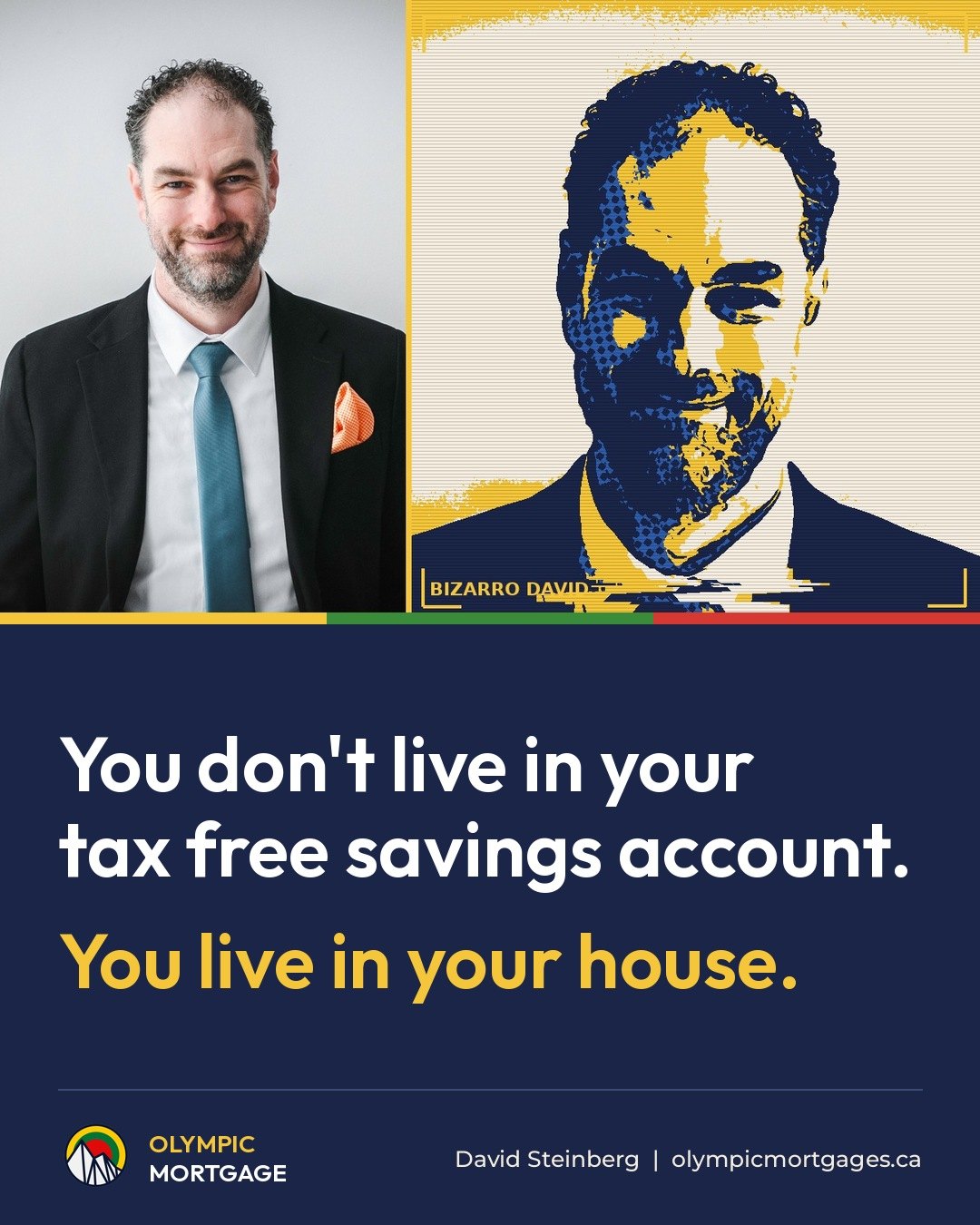
| Thanks, Bizarro David. You’re right, a tax free savings account is good, because assets inside of it grow tax free, and you can make withdrawals tax free. |
| But you don’t live in your tax free savings account. You live in your house. |
 |
Add another benefit: the power of leverage.
|
| And an additional benefit of owning a house over the tax free savings account – you can’t leverage your tax free savings account. Getting a mortgage is using leverage against the asset. It allows you to own an asset many times more than your original investment amount, and the capital appreciation you receive is on the value of the asset itself. Imagine the difference between owning stocks worth $20,000, versus using that $20,000 to buy a $400,000 asset. |
| I’ll let Bizarro David take it from here, and show you how much the leverage factor increases your total net worth. |
Bizarro David: the same $20,000, two ways, over 10 years. The stocks grow 5% a year. The home grows only 2% a year. Both gains are tax free.
| |
Stocks in a tax free savings account |
5% down on a home |
| You put in |
$20,000 |
$20,000 |
| You own |
$20,000 of stocks |
a $400,000 home |
| Growth rate |
5% a year |
2% a year |
| Growth after 10 years |
about $12,600 |
about $87,600 |
| Gain per dollar you put in |
63 cents |
about $4.38 |
Note the handicap. I gave the home less than half the growth rate of the stocks, and it still gains about seven times as much, because 2% of $400,000 is a lot more than 5% of $20,000. That is the leverage. It is an illustration, not a forecast. The home side leaves out what the leverage costs you: mortgage interest, the mortgage insurance premium that comes with 5% down, property tax and upkeep. It also leaves out the payments that shrink the mortgage, which help. And leverage works in both directions: if that home drops 5%, the $20,000 is gone on paper.
One footnote on David’s claim. You can’t borrow inside a tax free savings account, which is what he means. Close enough.
Leverage is a power tool. Back to you, David.
|
| Yes, Bizarro, you’re correct. If the home drops by 5% in value, then it erases more net worth much faster. But the thing that most people don’t remember is that you’re not selling your home just because it decreases in value one year. You live there. You’re not selling where you live because of an unrealized loss. You keep your house, and you sell when you’re ready, and hopefully, after the property has increased in value. |
| I always tell all my clients. Real estate is AT MINIMUM a 5 year investment. But the longer you own it, the better. |
Getting back to that commercial purchase deal.
|
| It’s maybe funny and somewhat unconventional, but on the deal above, I had conversations with both sides, after the deal had died. The people selling the commercial property realized that out of their proceeds, they would have to pay a massive capital gains tax bill, and they don’t even know yet what it’s going to be. They’d be giving up the asset that made them money every month, and paying a big tax bill to do it. That cuts their net gain by a lot. |
Bizarro David: A footnote on the sellers. They lived in the building, and the part you live in can count as your primary residence. In this case, only 20% of the property counted as their primary residence. That slice of the gain is tax free. The other 80% is not. So they get a bit of a tax break, not a rescue, and their accountant has the final number.
That’s the footnote. Back to you, David.
|
| They also realized that if they had just purchased a primary residence in the early 2000s for about $350,000, they might still likely sell for $1.6 million, but getting the difference, after what they owe, TAX. FREE. |
| C’est la vie. We all make mistakes, even me. |
| Before I say the original purchase was a complete mistake, they did reap massive income benefits from that commercial property over time. So sure, I guess the tax pied piper is coming their way. But they paid tax on all the dollars they brought in while they owned it, and they’re paying tax when they sell. They did get the benefit of the additional income, over time. |
From my buyer’s perspective.
|
| The buyer realized that he’s much better off deploying his capital into a tax free asset. That he lives in. |
| He can always buy a house with a suite, and that will provide him some income from the house he lives in too. Or, he can make the suite available on Airbnb, which many owners decide to do. |
Bizarro David: Before anyone lists the suite. In BC, a short-term rental has to be registered with the province, and a suite needs its own registration. In the larger communities you can only do it at the home you live in, plus one extra unit on the same property. Cities add their own rules on top: Victoria requires a business licence for any stay under 30 nights. Check with your municipality before you count on the income.
That’s the paperwork. Back to you, David.
|
 |
All’s well that ends well.
|
| It wasn’t a great deal for the buyer or the seller. |
| I’ll advise my buyer that he should be looking at a house to invest in as a primary residence. Live there, and benefit from the tax free status that gives you. Also, right now, these are on sale. All over the place. He has $300K to spend. Buying the $1.5 million place with $300K down is going to stretch him, no matter what income the place brings in. Putting $300K down on something that’s $850K, that’s a whole different qualifying story. |
| It’s a buyer’s market. Get your primary residence on sale. |
 |
Bizarro David: The Victoria Real Estate Board called October a balanced market, after September tipped toward buyers. I would have written “buyers have the upper hand right now.” David said buyer’s market. It’s his newsletter.
The floor is yours again, David.
|
For the economic update, I’m going to let Bizarro David write it up. Take it away, Bizarro!
|
Bizarro David: Friday was a bad day to own tech stocks. The Nasdaq fell 1,261 points, which is about 5% in one day. Five percent. It now sits lower than where it started the year, and the S&P 500 and the Dow both closed in a correction, meaning down 10% or more from their peaks. When stocks fall like that, money runs to the safest place it can find, which is government bonds. It’s called a flight to safety. I didn’t name it.
Here is the part David likes. When money piles into bonds, bond yields come down, and fixed mortgage rates follow bond yields. The Government of Canada 5 year bond yield dropped more than a tenth of a point on Friday, to about 3.42%. The 2 year is down almost a quarter point from its September peak. One good day is not a trend: yields are still well above where they were before the war with Iran started, and the Bank of Canada and the US Federal Reserve both announce on December 9. A US inflation number lands this week that could push yields either way.
Bad day for stocks, decent day for mortgage shoppers. Back to you, David.
|
My next venture: coming very soon.
|
| I’ve been a mortgage broker for 17 years and in banking and mortgage lending for what’s going on 22 years now. It’s time I began my next venture: Mortgage Lending. |
| There’s going to be another email shortly giving you the details on what is going to be my own mortgage lending company. It’s in the final detail stages and going to legal shortly. |
| And I plan to innovate in that space too, so stay tuned. |
A call with me is free, and takes 15 minutes.
|
| Like the deal above, I’m finding I’m having more and more conversations with people who need a level of strategy one level above everyone else. |
| A call with me gives you lots of clarity, a strategy, and of course, no stress. |
 |
Signing off for now,
David Steinberg
Mortgage Strategist, Olympic Mortgage |
|
A quick rate update.
|
| Rates as of November 23, 2026. |
| Mortgage |
Rate |
| Variable, high ratio, 5 year closed |
3.80% (prime – 0.90%) |
| Variable, conventional |
3.99% (prime – 0.71%) |
| Fixed, high ratio, 5 year |
4.54% |
| Fixed, conventional, 5 year |
4.94% |
|
| As per Bizarro’s economic update, fixed rates may be coming down slightly with Friday’s bond pullback. |
| Rates as of November 23, 2026, and subject to change without notice. O.A.C. Variable rates are based on a prime rate of 4.70%. High ratio means an insured mortgage with less than 20% down; conventional means an uninsured mortgage with 20% down or more. Eligibility rules apply. Existing deals cannot be repriced. Your rate depends heavily on your transaction and your qualifications. This is information only and not an offer of credit. |
| Side note: I was designing my fonts to be split between white and yellow long before I started using AI, and long before most people started using AI. Here’s my bus shelter ad from 2024. |
 |
|
Bizarro David: I checked the file. David built that ad himself in November 2024, and he tells me no AI was involved. White over yellow, yellow over white, one clear headline and a phone number you can read from across the street. David was pretty good at graphic design. I have been borrowing his colour trick ever since.
|
Bizarro David, with the boring stuff.David told me to keep his tone and his wording, so I did. The tax people call it a “principal residence.” David calls it a primary residence, and so does everyone else.
I helped David change the numbers and details of the deal in this story, so the people in it stay private.
Tax free assumes the home was your primary residence for every year you owned it, and the sale still has to be reported on your tax return. Rental suites, time away and second properties can change the answer. David is a mortgage broker, not an accountant. Talk to yours before you sell.
|
 |
|
Need strategy one level above everyone else?
Book a call Start an application |
| David Steinberg, Olympic Mortgage Corporation. 250-858-7160. olympicmortgages.ca. This newsletter is general information, not tax, legal or mortgage advice for your situation. Figures are rounded examples. Mortgage approval depends on your transaction and qualifications, O.A.C. |